
Rockford has made things for a long time, and the buildings that do it run on overhead doors that open all day. We repair sectional, rolling steel and roll-up doors on shops, plants, storage buildings and service bays, and the estimate is free.
Tell us what the door is doing. The estimate is free and precedes everything else.
A home garage door might open a handful of times a day. A shipping door on a busy floor can cycle that often in an hour, and its springs, cables and rollers wear on that schedule. High-cycle springs last far longer on a door like that, and they're what goes on a door that runs all shift.
The other kind of wear is impact. Forklifts, pallet jacks and trucks backing to the opening catch the bottom sections and the tracks, and a door that's been nudged out of square starts binding long before it stops. Catching that early is the difference between a bracket and a section.
The springs on a commercial door are far larger than a house door's and are wound under real tension. When one breaks, the door can become too heavy to lift safely, so it stays where it is until the technician has made it safe.
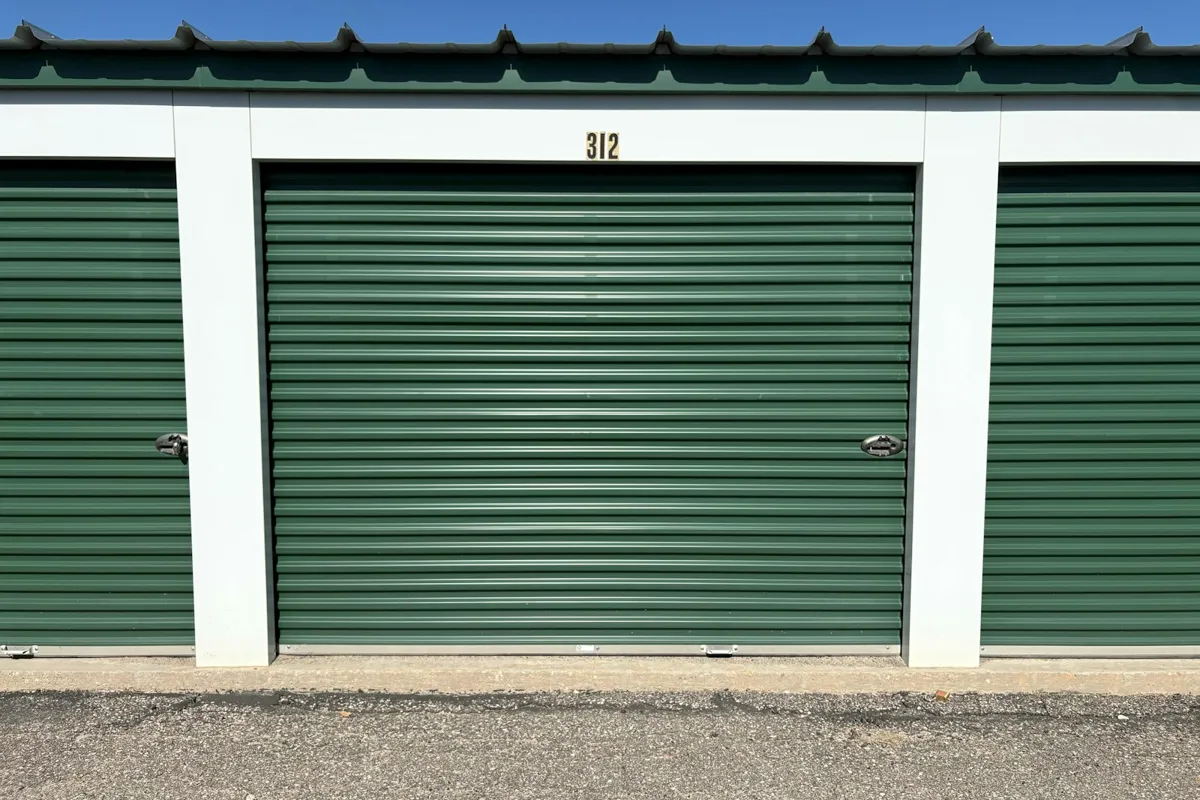
Sectional overhead doors, the panels-on-tracks kind, are the usual door on shops, service bays and warehouses. Rolling steel doors wind up onto a barrel over the opening, which suits low ceilings and buildings where security is the priority. Roll-up sheet doors are the lighter cousin, found on storage units and small outbuildings.
Each fails in its own way. Sectional doors give out in springs, cables and sections; rolling doors in the barrel springs, the curtain slats and the guides; sheet doors in their springs and the curtain itself. The technician starts from what the door does and works back to the part.
In the coldest weeks, the bottom of a loading door freezes to the slab, and an operator pulling against that ice can tear the seal, bend the bottom section or throw a cable off its drum. Doors left cracked open for ventilation and then driven down onto packed snow suffer the same way.
Bottom seals, cables and the operator's force settings are checked with winter in mind, and a door that's been fighting ice gets its sections and track looked over before it fails in the middle of a shift.
Road salt tracked in on tires and pallets works on the lower track and the bottom brackets all season, so those are part of every winter look as well.
Commercial operators come as trolley units that hang from the ceiling, jackshaft units bolted at the door's side to drive the shaft, and hoist units on heavy rolling doors, which keep a hand chain for outages. Three-button stations, photo eyes and the reversing edge along the bottom of the door all belong to the same system.
When an operator runs and the door doesn't move, the trouble is often a clutch, a chain or a sprocket rather than the motor. When the door reverses for no clear reason, the eyes or the edge are the first suspects. Either way, the repair is written up before it's done.
Operators also carry limit settings that tell them where to stop. When a door stops short of the floor or runs past the top, the limits may have drifted or a part in the drive may be slipping, and both are checked before anything is replaced.
An opening that won't close when the last shift leaves, or a door that stops short of its latch, leaves stock and machines open to the night. Those calls go ahead of routine work. The first job is getting the building closed and secured, even when the full repair needs a part ordered.
A door jammed shut on a shipping day is the other urgent one, and it's handled the same way: open it safely first, then fix it properly.
When you call after hours, describe the door, what it's doing and whether someone has to stay on site. You'll get an honest time for the visit, not a guess.
Plenty of older buildings still raise their doors by hand chain. Adding an operator turns that into a button press, and it's the moment to check the springs, because a motor shouldn't be lifting a door that's out of balance.
When a building has several doors, they can all be looked at in one visit. The estimate lists each door on its own line, so the pressing doors get done first and the others can wait for a quieter month.
Not every business door sits on a plant. Auto repair bays, fire-lane doors on small shops, contractor garages and self-storage rows all take the same parts and the same care, and a single bay door gets the same attention as a dock. Self-storage doors in particular wear at the springs and the latches, so they're checked as a row.
If the building has a door we haven't named here, describe it on the call. Nearly every commercial door comes down to springs, a curtain or sections, a track or guides, and an operator.
The same four steps whether it's one bay door or a whole row.
Yes. Coiling steel doors are a big part of the work here, together with sectional and sheet roll-up doors, from barrel springs and slats to guides and motors.
Usually not the whole door. Damaged sections or slats can often be replaced and the track straightened, which keeps the rest of the door in service.
Say on the phone that the plant or shop is standing open. Securing it comes before any scheduled job, and the visit opens with bringing that door down and locking it.
Yes. Repairs are scheduled around the building's hours where possible, and one door can be worked on while the others stay in use.
In most cases, yes. The springs and balance are checked first, so the new operator isn't lifting dead weight.
Yes. A torn reversing edge or a set of eyes knocked out of line will stop a door from closing, and both are repaired or replaced as part of the operator work.
Yes. Several doors can be checked in one visit, each written up separately.
Yes. The door is looked at, you hear what it needs, and the free estimate comes before any work.
We need three things: a name, a number, and what the door is doing. Everything before you agree to it asks nothing of you, across the whole of Winnebago County.
Easier to explain by phone? Call (815) 446-3251.
Tell us what the door is doing. The estimate is free and precedes everything else.