
Winter causes most of the opener calls here, and most of those aren't the opener's fault: a ridge of packed snow at the threshold, a door frozen at the seal, a detached garage colder than the opener likes. The rest are boards, remotes and new installs. The estimate is free.
Tell us what the door is doing. The estimate is free and precedes everything else.
When the plow goes by, or the driveway gets shoveled, a ridge of snow ends up right where the door lands. The door comes down, meets packed snow before the floor, and the opener reads that as an obstruction: it reverses, or it stops a few inches short and leaves a gap for the wind. People assume the opener's travel limit has drifted. Usually it's the ridge. If you'd like a phone alert the next time the door stops short, see smart garage door openers.
Clearing the threshold fixes it for the day. If it keeps happening, the bottom seal may be torn or the limit really has shifted, and resetting the down travel and replacing a split seal is a short visit.
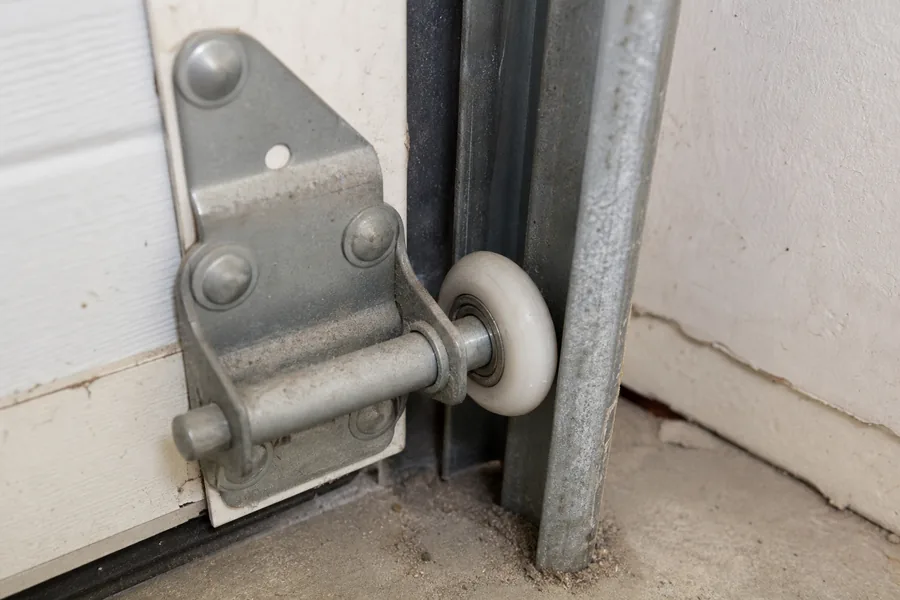
A garage standing apart from the house runs at outdoor temperature all winter, and so does its opener. Older chain drives slow down as their grease thickens, and a force setting that worked in October trips in January. The power feed out to a detached garage, buried or run along a fence, is another weak point after years of freezing and thawing.
The technician checks the power reaching the garage, the wall button's wire, and the opener's settings in the cold, and adjusts them for the season rather than simply cranking up the force.
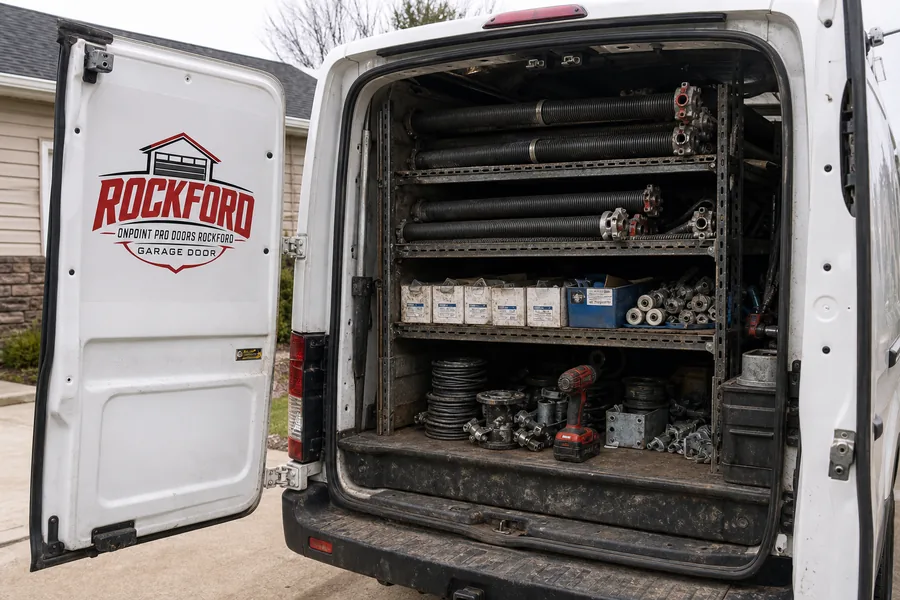
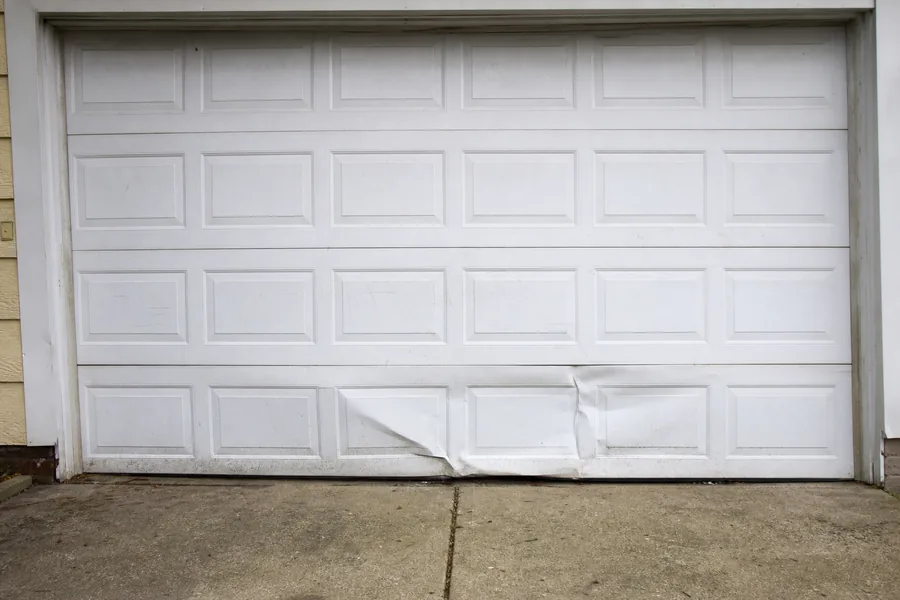
When a door is replaced, it's often the right moment to replace the opener too, especially if the old one is a decade or more old or was sized for a lighter door. A new door is balanced from day one, and an opener matched to it starts clean: rolling-code remotes, a battery backup for winter outages, and a quieter belt drive for garages next to the house.
The install covers removing and hauling off the old unit, hanging the new one on a rail or mounting it on the wall, aligning the eyes, setting travel and force, and pairing your remotes, keypad and car buttons, all tested before we go.
Five steps, the same every time.
Summer storms here bring down limbs and knock out power, and when the power returns, the surge can take the opener's board with it. The opener goes dark, or it responds to the button on the wall and ignores the remotes. A new board fixes it, and a surge protector protects the replacement from the next one.
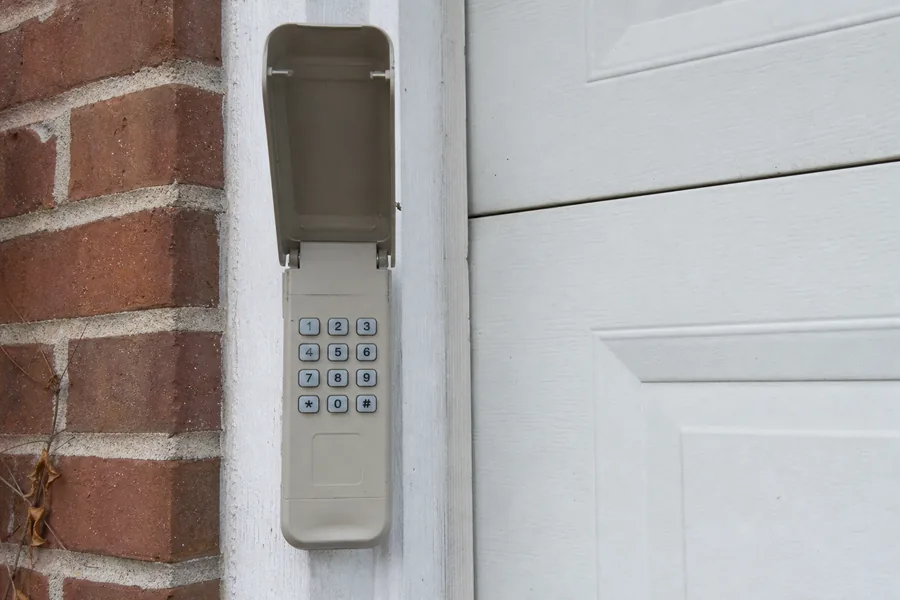
Keypads take a beating too: frozen in winter, baked in summer. One that stops answering usually needs a battery or a replacement, paired with a fresh code.
Churchill's Grove, Signal Hill, Rolling Green, Edgewater, the North End and Alpine, plus Loves Park, Machesney Park, Roscoe, Rockton, South Beloit, Belvidere and Cherry Valley. Parts and new openers ride along.
Name the street and you'll get a two-hour slot.
Look at the threshold. Packed snow makes doors reverse.
A cold detached garage slows old openers. Settings can be adjusted for winter.
Dark after a storm usually means the board. A part, not a new unit.
New door, new opener is often smart. Both start matched.
Every remote the sellers gave out, and the keypad code they picked, keep opening your garage until the opener is told to forget them. We wipe its memory and pair only your remotes, a new code and your cars. It's a few minutes' work, worth doing in your first week, and it fits into any other visit if you mention it.
Battery backup is worth having for winter outages, but a battery that sits in a freezing detached garage loses its punch faster. On those garages the backup battery is tested on every visit and replaced when it no longer holds a charge, so the door still opens the next time an ice storm brings down the power lines.
An outdoor keypad on a north-facing wall takes every blast of wind-driven snow. Moisture that gets behind the cover freezes, the contacts stop connecting, and the keypad goes quiet until it thaws. A better-sealed keypad, mounted where it's sheltered from the wind, avoids most of that.
Usually packed snow or ice at the threshold, or a torn bottom seal. Clearing it fixes the day; a new seal and a travel reset fix it for good.
Cold grease and a force setting made for warm weather. The opener is lubricated for the cold and its settings adjusted.
If the opener is old or was sized for a lighter door, it's usually the right time. You hear both options.
The board most likely took a surge. A replacement board goes in on the visit, and a surge protector helps next time.
Yes, up to the state line.
Yes, repairs and installs alike, written before work.
Cold and age drain them. It's tested and replaced on the visit.
Call or fill in the form with the door's symptoms and your street. You'll have a two-hour slot, and the technician rings from the road.
Estimates are free, in the city and in the towns up to the state line.
We need three things: a name, a number, and what the door is doing. Everything before you agree to it asks nothing of you, across the whole of Winnebago County.
Easier to explain by phone? Call (815) 446-3251.
Tell us what the door is doing. The estimate is free and precedes everything else.