
When a door leaves its track here, winter is usually involved: snow piled against the door, ice at the bottom of the track, a roller frozen stiff. Let the door stay where it stopped, pull the opener's plug, and call us. It's braced before anything else, and the estimate is free.
Tell us what the door is doing. The estimate is free and precedes everything else.
Snow thrown against the outside of a closed door by a plow or a snowblower, or drifted there by the wind, pushes the bottom sections inward. Nothing seems wrong until the door is opened: the rollers on the pushed-in sections have been forced toward the inside edge of the track, and on the way up one of them slips out. The door twists and jams part-way. Most derailments start as worn rollers or a drifting balance, which is what a garage door maintenance visit catches early.
Clearing snow away from the door face before opening it is the simple habit that prevents this. When it has already happened, the door is supported, the sections are checked for bends, and the rollers go back into a track that has been checked for kinks.
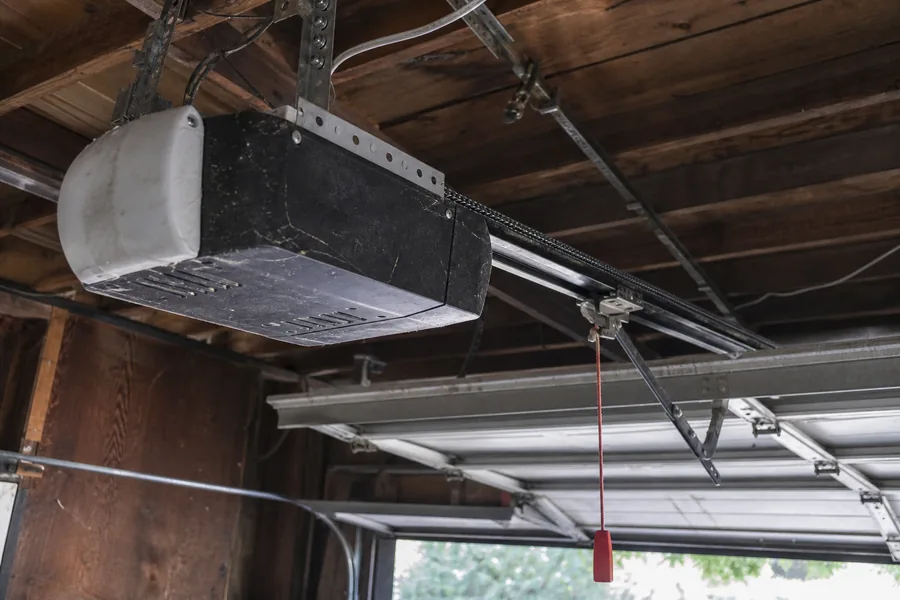
Unplug the opener or turn off its breaker. It will keep straining against a jammed door and can bend the track or pull the top bracket loose. If a remote is in the car or a pocket, keep it away from anyone who might press it.
Keep the car and everyone out from under the door, and don't try to force it either way. If the door is stuck open in the cold and the house is exposed, say so on the call; it moves you up the list.
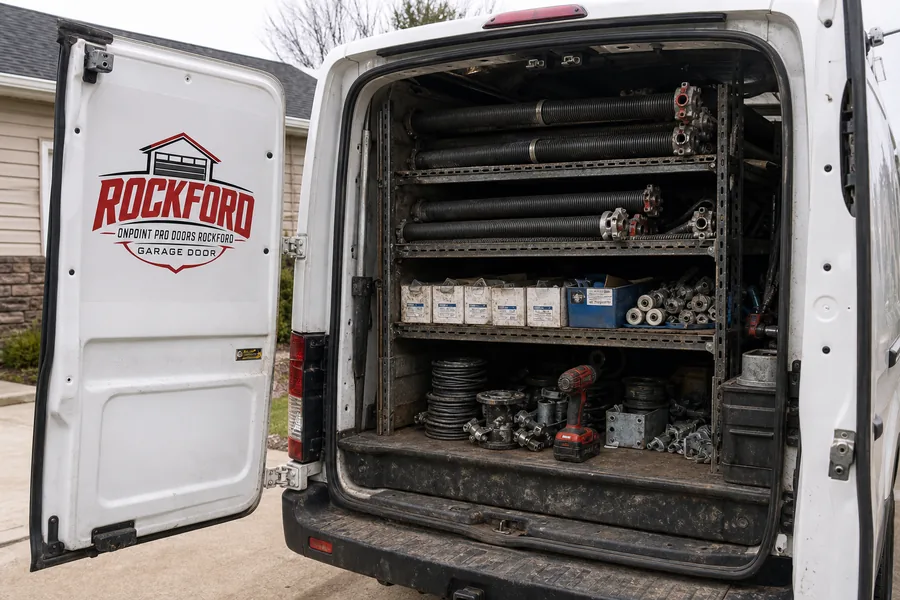
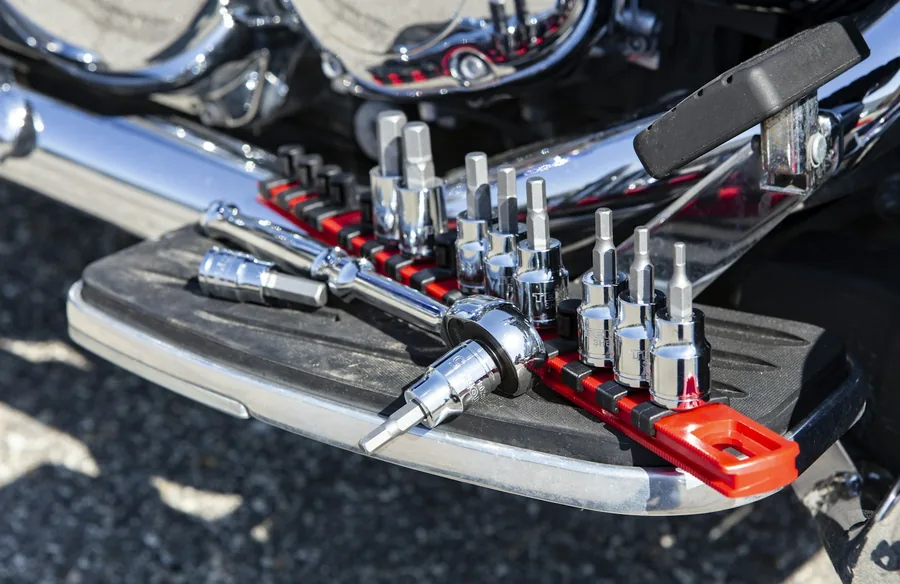
The order doesn't change.
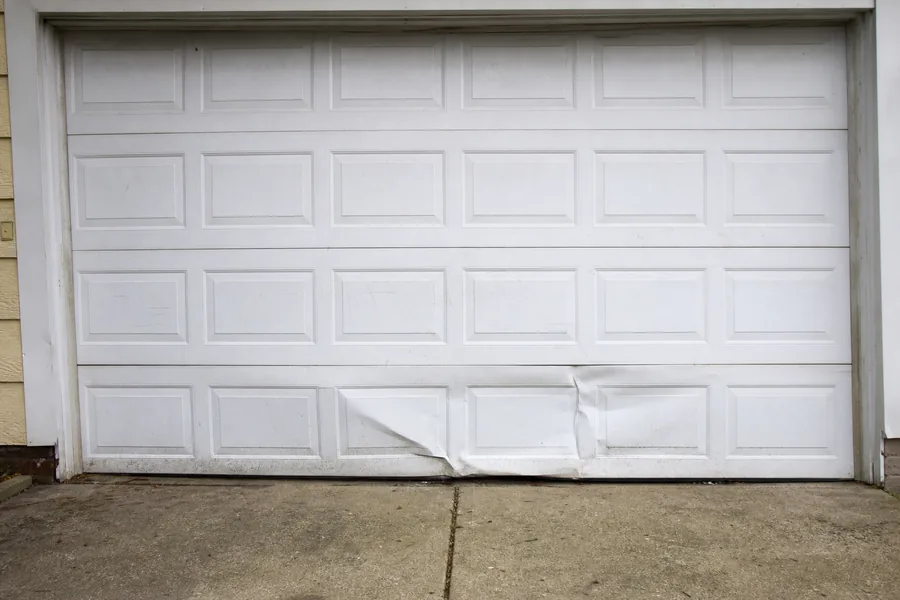
Many of the detached garages in the older neighborhoods were built when cars were shorter. A pickup or an SUV fits with little room to spare, and a bumper that touches the bottom section while parking is enough to push it out of line. The door closes fine that day and jams the next time it opens.
A parking stop on the floor, or a tennis ball hung where the windshield should stop, prevents a lot of these calls. After a bump, the bottom section's hinges and rollers get inspected for damage as well as the track.
In a deep freeze, an old roller with dry bearings can stop turning altogether. It skids along the track instead of rolling, catches at a joint between track pieces, and climbs out. Doors that leave the track on the coldest mornings, with no bump and no snow, usually point to the rollers.
Sealed-bearing nylon rollers keep turning in the cold, and they're the lasting fix after a freeze-related jam. They're listed as their own line on the estimate.
A two-car door is a big, flexible panel, and a summer storm with strong gusts can bow it inward while it's closed. When the gust lets go, the rollers in the middle of the door can end up riding the edge of the track, and the next open finishes the job. Doors that came out after a storm with nothing hitting them are often this.
A steel strut across the upper sections stiffens a wide door against wind and is a small addition during a rehang. It's written up as an option, with the reason, when the door needs one.
The alley garages of Churchill's Grove, Signal Hill and the North End, the split-levels in Rolling Green, Edgewater and Alpine, and Loves Park, Machesney Park, Roscoe, Rockton, Belvidere and Cherry Valley.
Name the street and you get a time window you can plan around.
The rehang. Supported, rollers back in, tracks squared.
Bent track. Straightened where it hangs, or replaced.
Rollers. A full set when they've stiffened.
Section damage. Named separately if a panel is bent.
A strut, if the door flexes. Offered on wide doors that bow in the wind.
The snow pushed the sections in and a roller slipped out. Leave it and call; the door is supported, checked for bends and rehung.
Usually a frozen roller that stopped turning. New sealed-bearing rollers are the lasting fix.
The bumped section, its hinges and the track are all inspected, and then the door is put back in line.
No. It's heavy, it may still be under spring tension, and a door that shifts while you're next to it is how people get hurt.
Yes, commercial sectional doors too.
Yes. Before the technician leaves, it's run through several full cycles and the safety reverse is tried, so you know it's right.
You get a time window when you call, and the technician rings when setting off.
That side took the knock, the snow or the frozen roller. The other side is still checked, because a door that twisted out on one side often strained the other.
Free, and written down before anything is done.
Call or send the form, say how the door is hanging and whether it's stuck open, and you get a two-hour window with a call before the technician pulls up. An open garage on a cold night is seen first.
Free estimate throughout the county and the towns north to the state line.
We need three things: a name, a number, and what the door is doing. Everything before you agree to it asks nothing of you, across the whole of Winnebago County.
Easier to explain by phone? Call (815) 446-3251.
Tell us what the door is doing. The estimate is free and precedes everything else.