
Gate drives that hum on frozen mornings, die after a cold snap, stop short, or ignore the remote after a plow went by. Hardwired, battery and solar, swing and slide, most are repaired in one visit. The estimate is free and comes first.
Tell us what the door is doing. The estimate is free and precedes everything else.
The gate drive, or operator, is the machine that moves the gate: a motor and gearbox, a control board, a power supply, and the safety devices and controls wired into it. Here it spends winters below freezing, in salt spray from the road, and summers under thunderstorms. Usually only one component has failed.
We repair swing drives with straight or articulated arms, slide drives on chain or rack, underground swing units, and hardwired, battery and solar setups, most in one visit.
Winter calls tend to cluster: dead batteries after a cold snap, frozen arms and tracks after an ice storm, and plow damage after the first big snowfall.
Many of the gates we service guard the only way out for a car on a winter morning, which is why a drive that won't move is treated as urgent.
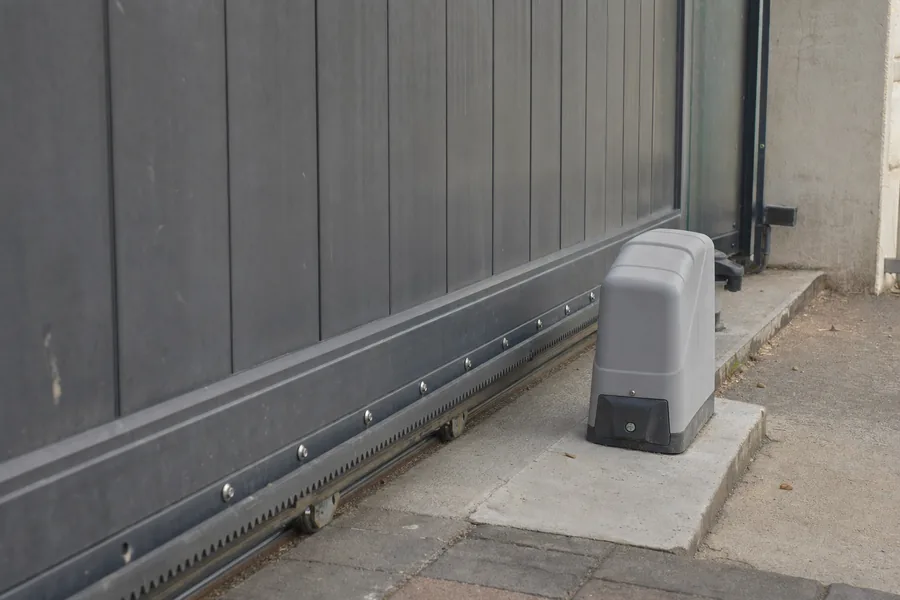
Six faults account for nearly every call. In rough order:
A hardwired drive runs from house power through a transformer. Battery-backed drives use house power to keep a battery charged, so they work through outages. Solar drives depend on the panel and battery alone, which is a challenge in a short, cloudy northern winter. In deep cold, a battery-backed drive can run down faster than it recharges.
Most no-power calls are simple: a tripped breaker, a failed transformer, a blown fuse or a battery beaten by the cold. A meter at the supply settles it before anything is replaced.
Solar setups here need a bigger panel and battery than the same gate would need farther south, and a panel under a foot of snow charges nothing at all. Keeping the panel clear is part of every winter solar call.
Buried low-voltage runs can be damaged by frost heave over the years, and a gate that loses power intermittently in winter often has a failing wire run.
A gate drive installed to the current standard has monitored entrapment protection: beam sensors, safety edges or both. If one fails or is disconnected, the drive won't run normally. Sensor lenses facing the street collect salt spray fastest.
That's on purpose. A gate that closes without working safety devices can trap a car or a person, so we repair those devices rather than bypass them.
In winter, a sensor lens coated with salt or frost is one of the most common reasons a gate won't close, and cleaning and lining it up again is part of the visit.
Where a gate crosses a sidewalk used by kids walking to school, every pinch point gets checked, not just the center of the opening.
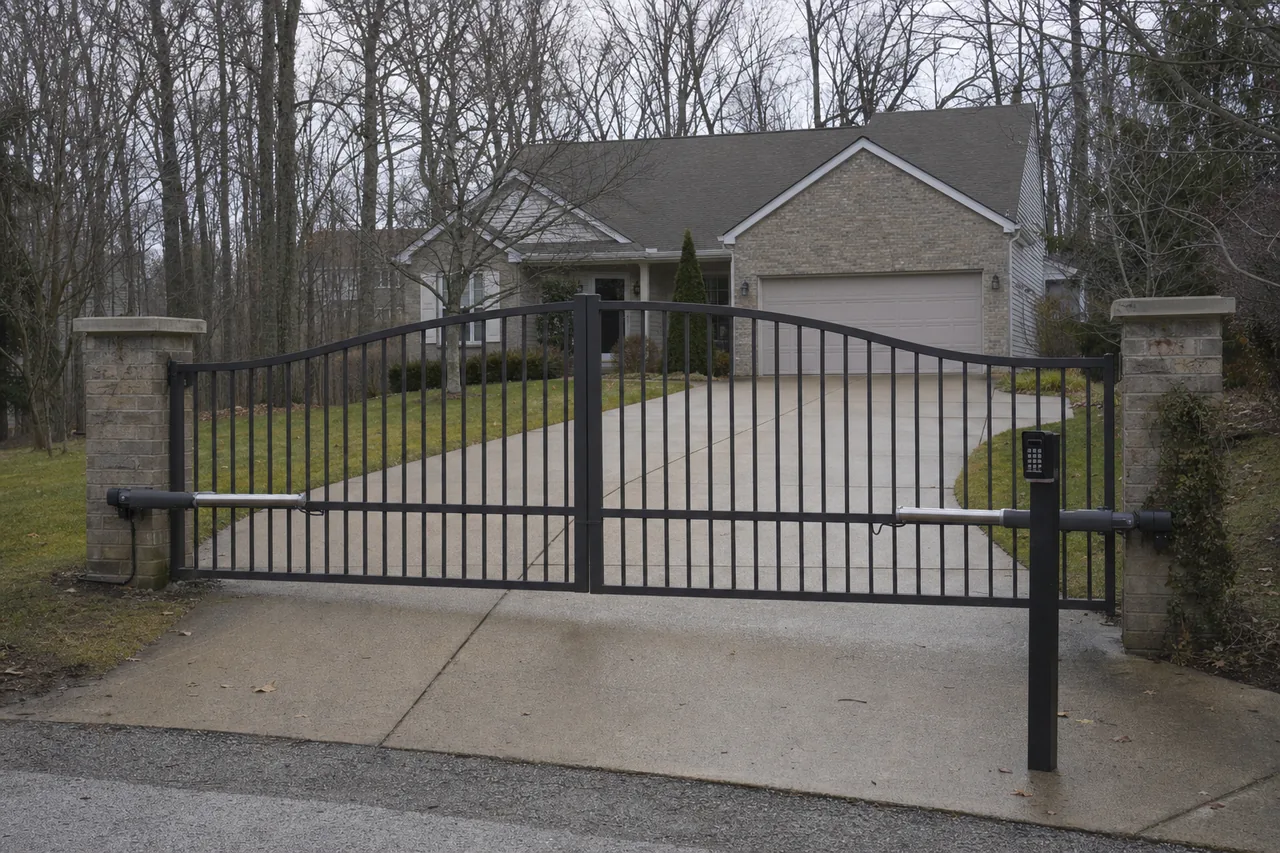
Straight-arm swing drives, the ram-style units on most double gates; folding arms for gates hung inside their pillars; chain and rack sliders; buried swing units; and heavier commercial drives on large gates.
Whatever the model, the diagnosis runs in the same order: power, board, limits, safety devices, motor and drive, controls last.
Underground swing units deserve a note here: they sit in a box at the hinge, fill with meltwater during thaws, and freeze, so drainage and seals come first.
Once the gate moves again, controls are usually the next complaint: receivers that lost their reach, keypads that stopped reading codes after moisture froze behind the buttons, intercoms that no longer ring the house.
Keypad posts in the plow's path get clipped almost every winter, and moving or protecting the post saves replacing the keypad again.
A fresh receiver with its antenna mounted high often cures a range complaint by itself, and every clicker in the house gets paired to it on the same visit. Antennas buried in a snowbank or iced over get moved up and out of the way.
A single call books a two-hour window, and the technician shows up carrying what the symptoms point to, including batteries rated for cold in winter.
A battery, a board, a capacitor, a sensor or a receiver is a repair, and those are normally done that day.
Keypads and intercoms at the street take the most salt and cold, and replacing them is routine.
Put a new drive on a gate that drags or freezes in place and it lasts about one winter. When the gate wore out the old drive, the gate gets fixed first.
When a replacement is warranted, the new drive is matched to the gate's weight and traffic, with cold-weather options where the maker offers them.
Mighty Mule, Elite, Eagle, FAAC, DoorKing, Viking, US Automatic, Nice and Apollo, Ghost Controls, and LiftMaster and Chamberlain gate drives, among others.
Winter is the hard season. Cold cuts battery capacity and thickens grease, salt spray corrodes terminals and boards, frost heave moves posts and cracks loops, and ice locks arms and tracks. Summer adds thunderstorms, surges and fallen limbs.
Freeze-thaw cycles are the slow damage: water gets into housings during a thaw, freezes overnight, and works seals and connections loose a bit further each time.
Spring brings its own round of calls, as frost heave settles and loops that cracked over the winter start to fail.
The pattern is steady: batteries and frozen arms in the cold months, plow and salt damage after the big snowfalls, loops after the spring thaw, and boards after summer storms. The truck is loaded to match the season.
Whether the drive shows a light, whether a breaker has tripped, whether it's solar and the panel is under snow, and whether the gate is frozen, blocked by a drift or clipped by a plow. That shapes what we bring. Photos help, especially of any plow damage.
Three things to skip while you wait: bypassing a safety device, running the motor again and again against a frozen gate, and opening a housing that still has power.
Both, usually on the same visit. Most of the work is on the drive, and the gate itself gets fixed too whenever it's part of the problem.
On a cold morning, usually ice in a hinge, the arm pivot or the track. Otherwise it's the start capacitor on an AC drive or a cold, weak battery on a DC drive, and both ride on the truck. Ice gets cleared before anything is replaced.
Rarely. A sensor glazed with salt or frost, or a safety edge reacting to something, is far more common, and each device gets checked separately.
Yes: battery, charge controller, panel wiring and the drive. In winter the usual finding is a battery beaten by the cold or a panel buried under snow. Panels get cleared and checked for shade.
The popular makes and most of the rare ones. The fundamentals of boards, safety devices and controls don't change from brand to brand. A photo of the label helps with anything unusual.
No. A sensor keeping the gate open is protecting someone, and the fix is to repair it.
Most days. A gate frozen shut with a car behind it, or stuck open overnight, goes ahead of routine calls. Tell us if a car is trapped.
A single call sets up a two-hour arrival window, and the technician phones before setting out. You deal with us directly, and nobody guesses at a gate over the phone.
The estimate is free and comes first.
Describe what the drive is doing and you'll have an arrival window. The visit and the estimate are free across Winnebago County.
Easier to explain by phone? Call (815) 446-3251.
Frozen, humming or silent, and what powers it. The estimate is free and comes first.