
Driveway gates frozen in place, dragging on heaved concrete, clipped by a plow or dead after a cold snap, repaired along with the gate drives, sensors and keypads behind them. Most jobs finish in one visit, and the estimate is free and comes first.
Tell us what the door is doing. The estimate is free and precedes everything else.
Winter is hard on automatic gates here. We repair powered swing gates on straight or articulated arms and sliding gates on ground tracks or cantilever rollers, along with the gate drives, batteries, beam sensors, vehicle loops and entry keypads that run them. Gates at the end of long drives out toward Roscoe and Cherry Valley often run on solar, which winter tests hardest.
Typical setups around town are steel or ornamental aluminum swing gates at the end of a driveway in the newer subdivisions, and sliders across longer drives out toward Roscoe, Rockton and Cherry Valley.
The approach doesn't change with the gate: the gate itself gets checked before the drive is blamed.
Plenty of gates here are also the only way out for a car on winter mornings, which is why a frozen gate is treated like a garage door that won't open.
An automatic gate has more ways to stop than a garage door, and winter adds a few. The ones we see most:
Gate drives are rated for gates that move freely. Frozen hinges, a post shifted by frost heave, or a track full of ice and grit makes the drive fight the gate on every cycle, and the motor and gearbox pay for it. The worst of it comes in late winter, after weeks of freeze and thaw.
That's why the drive's cover stays on at first. With the arm unhooked, the technician walks the gate through its travel by hand, feeling for ice in the hinges, a heaved post or rollers that won't turn, and clears and treats them with a cold-rated lubricant before anything electrical is opened.
Posts set above the frost line are the usual reason a gate that hung true in summer drags by February. The ground lifts the post a little each winter, and the latch side starts to scrape.
Cold shortens battery life and thickens grease, salt spray corrodes hinges, chains and terminals, and freeze-thaw cycles work water into every housing and seal. Summer storms add surges and fallen limbs.
Road salt deserves its own mention. Spray from passing plows and cars coats hinges, chains and terminals near the street, and the corrosion creeps in over a few winters.
Plows are a hazard of their own. A plow blade can clip a keypad post, gouge a loop out of the driveway or push a snowbank against a slider's track, and a gate that worked the night before won't open in the morning.
Snow piled against a swing gate's path is another common call: the gate starts to open, hits the drift, and the drive trips its overload.
Heavy, wet spring snow brings its own trouble, weighing down leaves and packing slide tracks just as the ground starts to thaw.
Nearly every gate repair wraps up in one trip; the parts that fail in winter, batteries, sensors, keypads and arms, are stocked on the truck.
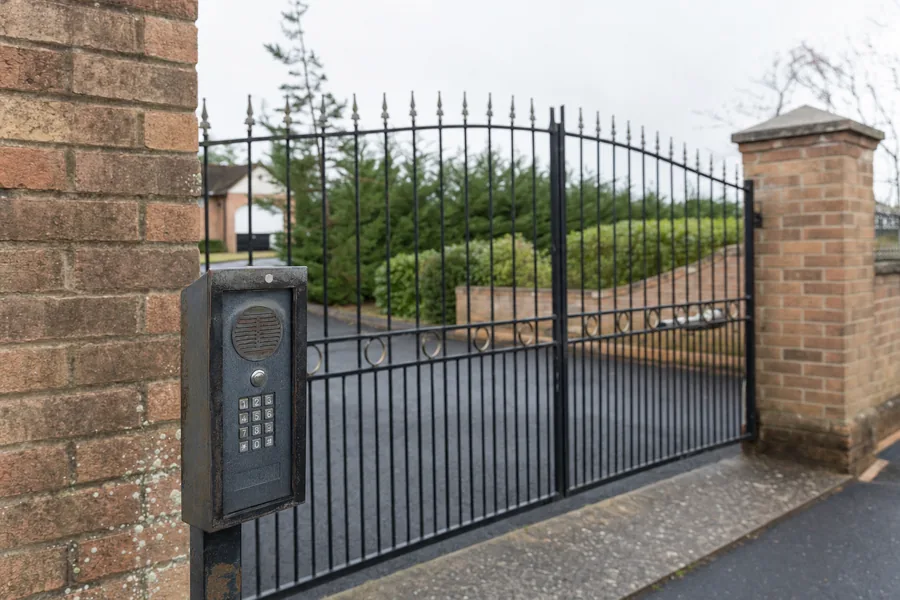
Many winter calls end up being controls rather than the gate: a keypad cracked by frost or clipped by a plow, a receiver whose antenna iced over, an intercom that went quiet, a loop broken by heave.
Safety devices stay in service. A gate closing onto a car or a person is a hazard, not an inconvenience, so sensors and edges are repaired, never bypassed.
Keypad posts set too close to the plow's path get moved or protected, so the same keypad isn't replaced every winter.
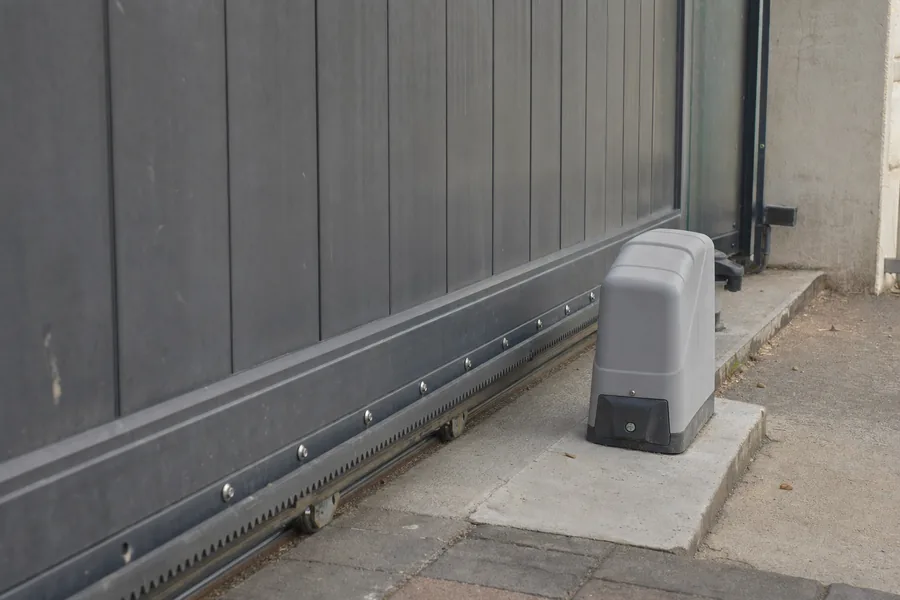
Most gate drives deserve to be kept. A fresh battery, a board, reset limits or a replacement arm or chain usually buys several more winters. The call on repair versus replacement is laid out before anything is ordered.
When a drive does need replacing, it's matched to the gate's actual weight and width, and only after the gate moves freely by hand.
For gates far from the house, solar is possible, but a northern Illinois winter demands a larger panel and battery than a southern one, and the panel needs a spot the snow won't bury.
The drives we see most here are Mighty Mule, LiftMaster, Elite, GTO, FAAC, DoorKing, Viking, Linear, Nice and Apollo, and Ghost Controls. Common parts ride along, and a photo of the label settles anything unusual.
Useful details: any light on the drive, sun or house power, a hum or silence, and whether the gate is frozen, drifted in or stuck open. A photo of the drive and the gate helps.
Please don't keep pressing the remote against a frozen gate. Each attempt strains the motor and gears, and a burned-out motor turns a thaw into a replacement. If the gate is frozen, a call is quicker than a new motor.
If the gate swings or rolls freely by hand and still won't budge under power, the fault lives in the drive: motor, capacitor, board, supply, battery or a safety input. The meter points to it, and the usual suspects are replaced that day.
A beam sensor or edge, most of the time. Salt film, frost or snow on the lens, a sensor knocked sideways by a plow, or a failed device keeps the gate open, and it's a quick fix.
Usually. Winter's usual failures are stocked for the common brands, and anything that has to be ordered gets named before we leave.
Yes. A property open to the street, or a car trapped behind a frozen gate, gets priority, and a gate we can't finish is left closed and secured. If a car is trapped, say so first.
Generally, yes. Drives wear out one part at a time. Replacement wins only with a burned-out motor, a brand no longer supported, or a drive that was too small for its gate.
Yes, provided it's metal, moves easily by hand and hangs on sound posts. We check all three before recommending a drive, and solar is possible where power is far away, with a panel sized for short winter days.
Yes, along with receivers, intercoms, phone entry and loop detectors. After a hard winter, controls are a large share of what we fix.
At least yearly, and the best time is fall, before the first freeze. A tune-up covers hinges, rollers, track, battery, sensors and reverse, with a cold-rated lubricant on everything that moves. Fall is also when keypad posts near the plow path get protected.
A single call sets up a two-hour arrival window, and the technician phones before setting out. You deal with us directly, and no one guesses at a gate over the phone.
The estimate is free and comes first.
Describe the gate's behavior and you'll have an arrival window. The visit and the estimate are free across Winnebago County. Photos help.
Easier to explain by phone? Call (815) 446-3251.
Frozen, stuck or dragging, swing or slide. The estimate is free and comes first.