
January brings its own version of this call. The door drops a foot, hesitates, and climbs back up while a light on the opener blinks. Frost on a lens, a bracket knocked by a snow shovel, salty slush splashed across the beam or a wire gone brittle in an unheated garage is usually the reason. The estimate is free and comes first.
Tell us what the door is doing. The estimate is free and precedes everything else.
Down low on each side of the door opening, a pair of beam sensors keeps watch. The transmitting one throws an invisible line of light straight across; the receiving one on the far side confirms it arrives. Once that line is cut while the door travels down, the opener reverses direction. Required on residential openers for decades, it's the feature that stops a heavy door from pinning a child, a dog or a car.
A door that won't come down, with a blinking light, is therefore usually an opener obeying a false alarm. Something is interrupting that line, or the sensors believe it is, and finding what is the job.
Winter makes false alarms more common, because frost, salt spray and snow all end up right where the sensors sit, a few inches above the slab.
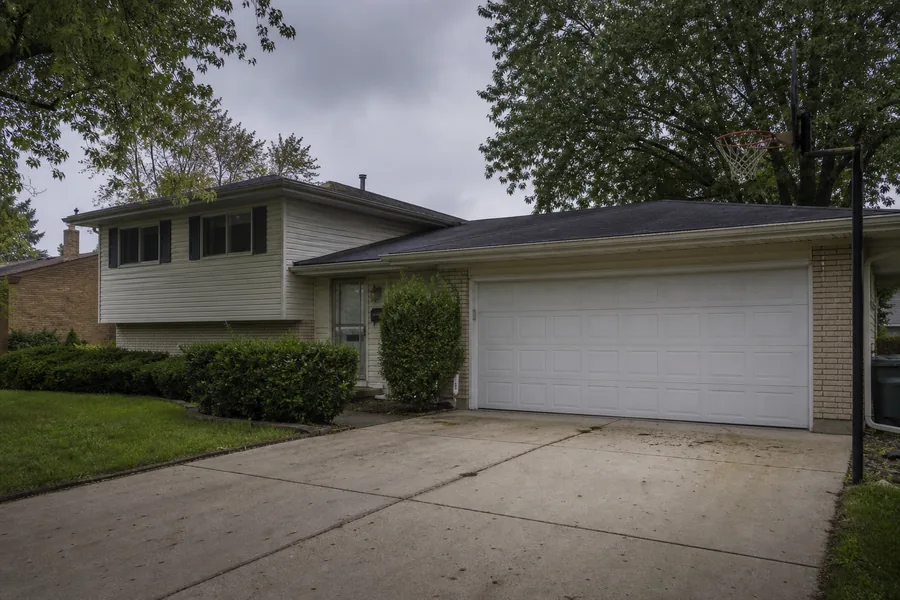
Nothing on your end needs adjusting. Describe the lights when you call and the technician will bring what fits.
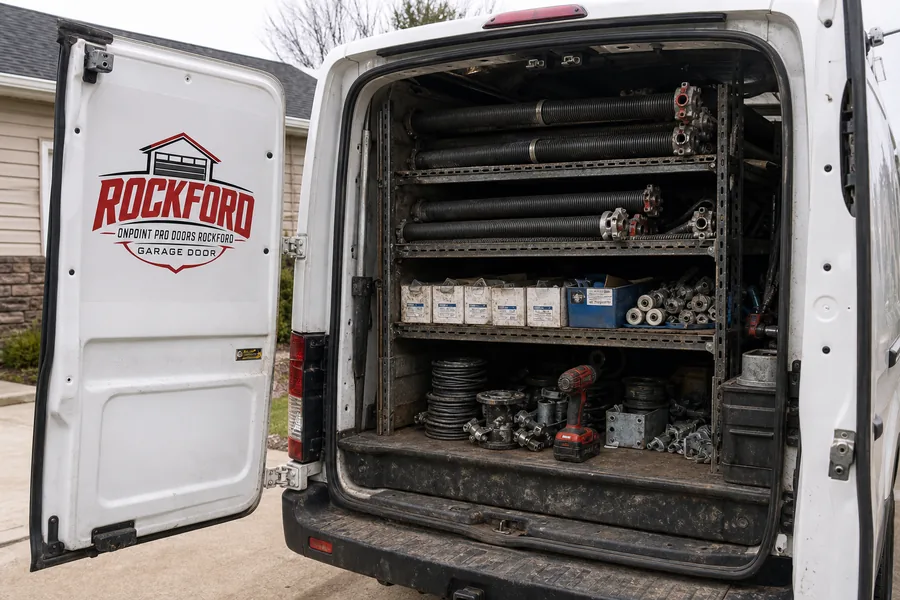
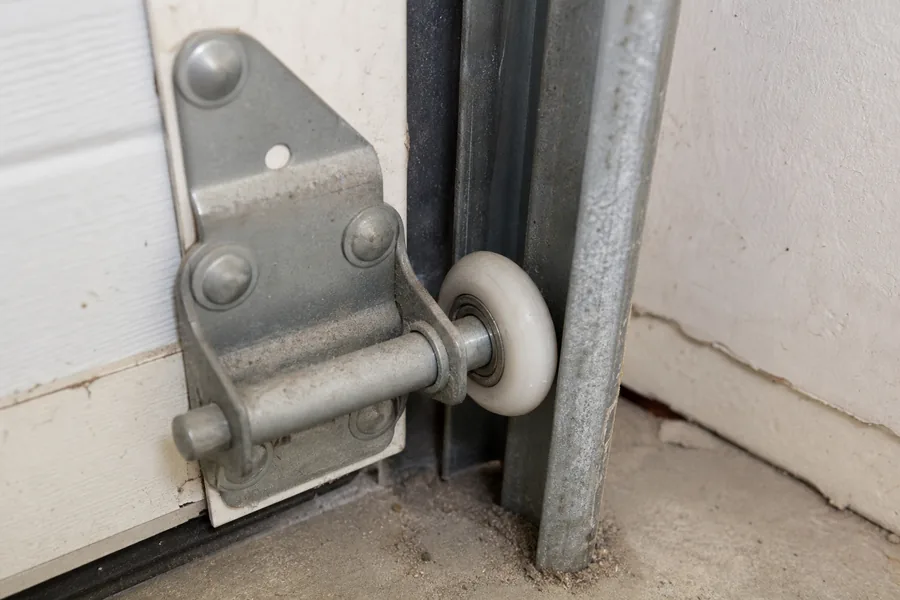
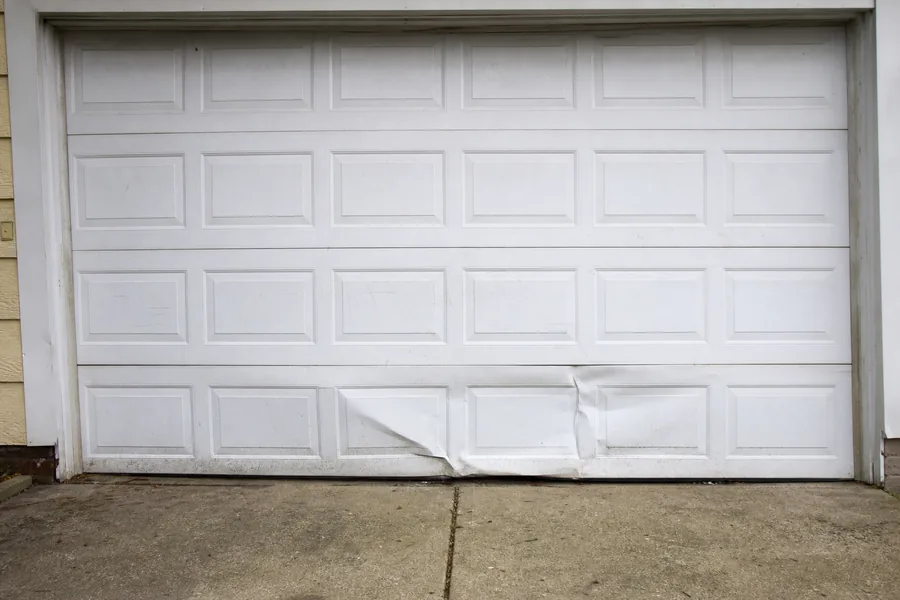
Most common first, which is also the order the technician checks:
A garage that won't close on a below-zero night lets the cold into everything: the car, the water lines along the wall, the door into the house. Tell us when you call; a door stuck open is scheduled ahead of routine work, and the technician carries a matched pair of sensors in case yours are done.
Resist propping the sensors on a shelf so they face each other. The door will close, but nothing watches the opening anymore, which is exactly the risk the sensors are there to remove.
When both lights are steady and the path is clear, the opener is reversing for another reason. Reversing the moment it touches the floor means the close limit is set a touch too far. Reversing partway, on a door that feels heavy to lift, means the springs have weakened and the opener is hitting its force limit.
Cold makes this more likely. Grease stiffens, rollers drag, and a bottom seal frozen to the concrete holds the door down, so the opener works harder than its setting allows and turns around.
Insulated doors, or foam panels glued to the back of an old door, add weight the springs weren't sized for, and that shows up first on the coldest mornings.
Freeze-thaw cycles, salt and the occasional shovel finish sensors off eventually. Matched pairs for LiftMaster, Chamberlain, Genie and the other common openers travel on the truck, and since the two are made as a set, both are replaced together. A pair that has spent several winters caked in salt is usually due.
Damaged wire is replaced end to end and run in insulated clips, clear of the tracks and anywhere shovels and snowblowers get parked.
New sensors go on at matching heights just above the slab, aimed squarely at each other, on fresh brackets if the old ones have been bent.
The technician checks the path first, then the lenses, then the aim, then the wire running back to the opener. If a sensor has failed, both are replaced. Before leaving, the opener is released and the door lifted by hand, because a door that keeps reversing in the cold often has a spring or roller problem underneath.
Most sensor calls are short. If the door itself needs work, you hear what and why before anything more is done. Winter calls often turn up a spring near the end of its life as well.
"The opener is finished." Rarely. An opener refusing to close on a perceived obstruction is doing its job.
"Just disconnect the sensors." Then nothing protects anyone under a closing door. We repair sensors; we don't remove them.
"New sensors need a new opener." A replacement pair wires into the opener you already have.
Often neither. The receiving sensor's light goes out whenever the beam isn't reaching it, so frost, grime, aim and clutter are ruled out before anything is replaced.
Then the sensors are the problem. Most openers let the wall button override a blocked beam as long as it's held, so a door that only closes that way has a beam issue. A remote that never works at all is a separate fault, looked at on the same visit.
Probably not. Slush thrown against the lenses, a bracket clipped while shoveling, or a wire cracked by the cold are all common after a storm, and the technician checks each.
Almost always the sensors, the wire or a bracket. An opener is replaced only if the unit itself has failed, and you'll hear that on site before any decision.
Yes, anywhere in Winnebago County and the towns around it. If new sensors are needed, you hear it before any work.
Often the same day. A door stuck open in winter goes ahead of routine calls, and a car trapped inside on a cold morning moves up too.
Edgewater to Roscoe, Belvidere to South Beloit, one call gets a two-hour arrival window, and the technician calls before heading over. Nobody tries to diagnose a door by phone.
Free estimate. Throughout Winnebago County, including Churchill's Grove, Signal Hill, Rolling Green, Loves Park, Machesney Park, Belvidere, Roscoe, Rockton, Cherry Valley.
Describe the lights and the door and you'll get an arrival window rather than a guess. The visit and the estimate are free across Winnebago County.
Easier to explain by phone? Call (815) 446-3251.
Which lights are on, and what the door does. The estimate is free and comes first.