
Garage door repair and spring replacement in Rockton, for the older houses around the historic downtown and the newer subdivisions on its edges. A snapped spring, a stubborn opener or a door that needs replacing, the estimate is free.
Tell us what the door is doing. The estimate is free and precedes everything else.
The houses near the historic center are older, and many have small detached garages with single doors, sometimes still on extension springs that stretch along the tracks. Out on the newer streets, the garages are attached two-car bays with insulated steel doors on torsion springs. The two need different parts, so it helps to say which you have when you call.
Either way, the visit follows the same pattern: the balance felt by hand, the worn parts named, and nothing done until you've seen the estimate.
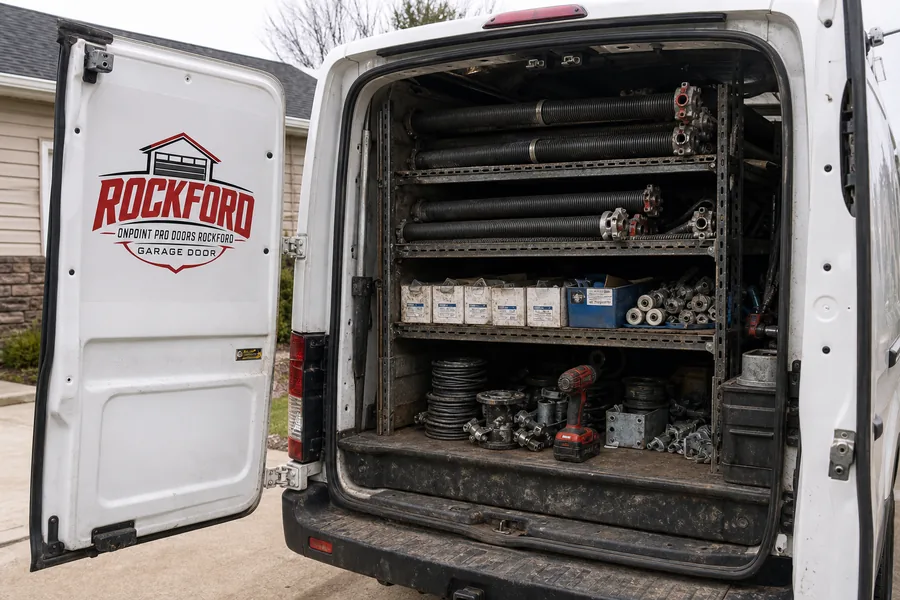
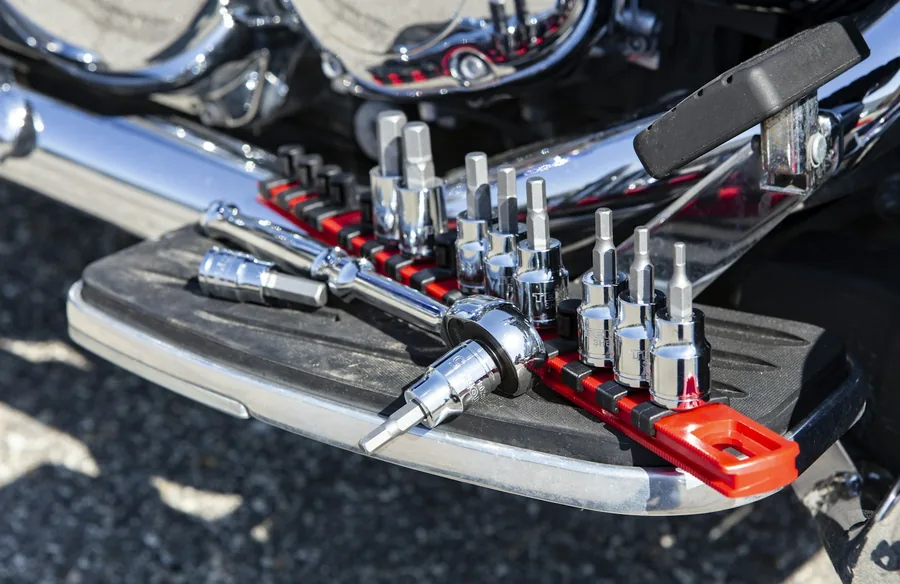
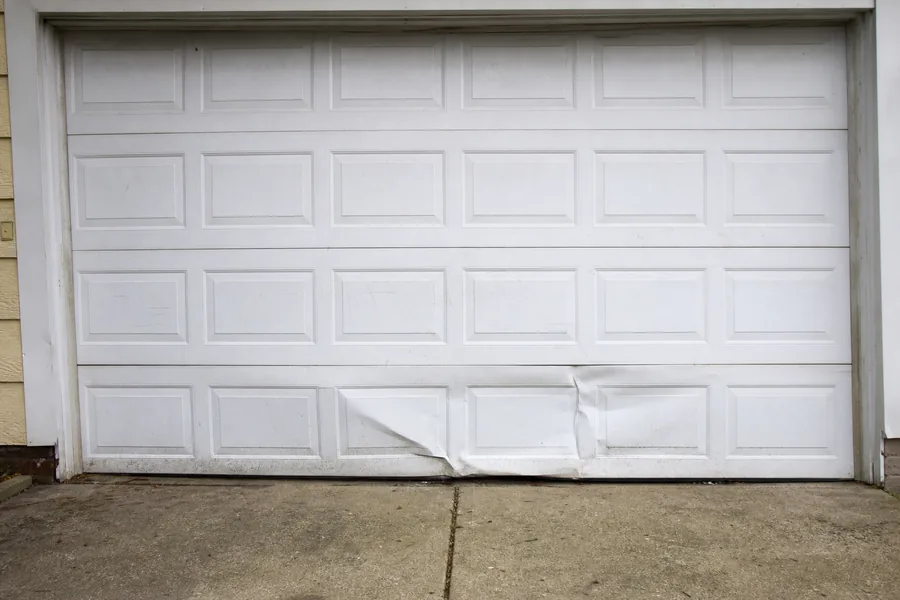
A broken spring leaves the door as dead weight, too heavy for the opener to raise. Both springs are replaced together, because the one still in one piece has done exactly as many trips and won't last much longer. Each new spring is chosen for the door's actual weight, measured on the spot rather than copied from the old label, so the door balances and the opener isn't strained. Extension springs also get a safety cable run through the middle, which holds the pieces if one ever snaps.
Torsion springs sit on a steel bar right above the closed door, coiled around it. Extension springs run front to back above the horizontal tracks on each side, stretching as the door closes. If you're not sure which you have, describing where they sit on the call is enough; the technician measures everything on site either way.
Rust on the coils, a visible gap in one spring, a door that's harder to lift than it once was, or a door that rises unevenly all point to springs close to their limit. Swapping them at a time you pick beats finding out on a cold morning with the car inside.
Never in a different order.
A lighter single door may lift on one torsion spring, while most double doors need two. When a one-spring door breaks, it's worth asking whether a two-spring setup suits it better: the load is shared, the door stays balanced longer, and if one spring ever breaks, the other keeps the door from dropping hard.
Springs give up a little tension over the years, so a door that once rose with one hand starts to feel heavy and the opener strains. If the springs are still sound, they can sometimes be re-tensioned to bring the balance back. If they're rusted or nearly worn out, new ones are the better repair, and the opener lasts longer for it.
On the newer streets the first repairs tend to be springs reaching the end of their builder rating, openers whose sensors got knocked by a bike, and remotes that lost their pairing. A door a few years old is almost always worth fixing, and those visits are usually short.
Two-car doors on these houses are heavy when insulated, so longer-life springs make sense when the originals give out.
The lifting cables are anchored at the door's lower corners and wind onto drums on the torsion bar. When a spring breaks, the sudden slack can throw a cable off its drum, leaving the door hanging crooked or jammed. Frayed or kinked cables are replaced, and both sides are set to the same tension so the door rises level.
A door that goes back up on its way down, an opener that hums without moving, or a unit that went dead after a storm: sensors, gear and board are checked in that order, and the parts that usually fail ride along. When an opener dates from before rolling-code remotes, a new one comes up as an option.
If the door stops a few inches short or reverses at the floor, the opener's travel limit may need resetting, the sensors may be seeing something, or the door may have gotten heavy enough to trip the force setting. Each is a quick adjustment once the cause is found.
If a door is beyond fixing, the replacement suits how the garage is used: an insulated steel door where it's attached, a lighter one for an unheated detached garage. The old door leaves with the crew.
Salt tracked in on tires sits against the bottom of the door all winter, and the brackets that hold the lifting cables rust from it. A rusted bracket can fail, and a frayed cable is usually the first sign. Both are checked whenever the springs are off.
Roscoe and South Beloit to the north and east, Machesney Park and Loves Park to the south: one crew covers them all.
Yes. They've worked as a pair from the start, so the second is close to breaking too; a matched new pair keeps the door balanced.
Rust, a gap in the coil, a heavier door or uneven lifting. A check on any visit will tell you.
No, that's the extension type. Replacements go in as a pair, each with a safety cable running through its center.
Usually the opener's travel limit or the sensors. It's adjusted and tested on the visit.
Yes. The opening is measured first, and we take the old one away.
Sometimes, when they're sound and have only lost some tension. Rusted or worn springs are replaced.
Please don't; it's very heavy without the spring. Leave it and call.
Yes. Every part is listed on a free written estimate first.
Phone or send the form, and the office will tell you when to expect the technician.
The free written estimate comes first, and the springs go on only after you say go.
We need three things: a name, a number, and what the door is doing. Everything before you agree to it asks nothing of you, across the whole of Winnebago County.
Easier to explain by phone? Call (815) 446-3251.
Tell us what the door is doing. The estimate is free and precedes everything else.